Friday, 31 July 2015

When not to go on a hike


There is no doubt that hiking is good for the body, but sometimes it is not advisable to go hiking despite the health benefits.

One should not go hiking when:

1. Ill- When ill it is advised that you rest the body and do not put the body under any form of stress. Hiking will take away the much needed energy when you are ill. This is even more applicable for intense and difficult hikes.

2. Pregnant- If you are pregnant a little walk may be good but not hiking. It is actually dangerous to go hiking while pregnant because you can slip, fall or even more dramatic, go into labour with no experienced personnel around to deliver your baby.

3. Raining heavily- It is not advised that you go hiking in heavy rains, especially if the hike is at a waterfall where there are ravines, rivers and gorges. Many people have died after ending up in difficulties, either from slipping or falling into the water which can be very powerful.

What to do if you become lost at a hike


Most of the cases where people become lost was a result of them going off the trails. It is therefore crucial that you stay on the trails and notify the tour guide when you desire to go off track.


The Number One tool needed for survival when you are lost or injured in the wilds is a Positive Mental Attitude. You should continually tell yourself that you have to get home. When you panic or lose hope, the situation becomes fatal.
The Number One thing you should have done before you got lost is something you should have done before ever stepping on the trail. Leave Your Hiking Plan and expected return time with someone, they can report you missing if you do not check in with them at your return time. If you also left this information with a ranger at the trailhead, they'll know quickly when you are not back.
stop and stay calm think of what to do observe your surroundings plan to survive
STOP - As soon as you realize you may be lost, stop, stay calm, stay put. There is nothing you can do about whatever got you to this point - all you can do now is solve the problem of getting out of the situation. The further you walk, the longer it will take rescuers to find you. If you don't know where you are, walking further has at least a 75% chance of being the wrong direction. If you are not safe where you are, then move to someplace safe and stop there.
Sit down, take a drink of water, eat a handful of trail mix, and relax while you think things over.
THINK - Go over in your mind how you got to where you are. What landmarks should you be able to see? Were you heading North or West?
Do not move at all until you have a specific reason to take a step. Walking around while thinking is not good, sit on a rock or log while you observe your surroundings.
OBSERVE - Get out your compass and determine the directions from where you are currently sitting. Using your map and the general area where you are, identify landmarks that you should be able to see. This step is often enough to get re-oriented and sure of where you need to go to get back on track.
Consider your situation. Estimate how long you have until dark. Check out the weather and determine if it looks like it will be getting better or worse. Check your water and decide how long it should last. Consider the other hikers in your party and how they are doing when you plan your next steps.
PLAN - Based on your thinking and observations, come up with some possible plans and then act on one of them. Prioritize the needs of your group and deal with them in turn.
If you are confident that you have determined the way to go and have time before dark to reach a known spot, such as the marked trail on your map, then go carefully and obviously mark your route with stacked rocks, sticks stuck in the ground, or strips of cloth from your bandanna.
If you are not very, very confident in the route, then its better to stay put.

Sunday, 24 May 2015


Hiking to Mermaid Pools. Great hike in beautiful Trinidad and Tobago!!

The Mermaid Pools is made up of three pools of turquoise color that is beautiful beyond compare. Not only are the pools beautiful but they are perfect for having a good swim or simply relaxing.

Monday, 5 January 2015

Beginner's Guide

Are you new to hiking?

It is crucial that beginners satisfy certain requirements before engaging in hiking. This is necessary to ensure that the hike goes as smooth as possible without any discomfort or damages to yourself. The below list introduces some requirements that must be met before you head to the mountains.

Medical Fitness Assessment: Visit your physician to determine whether you are in good physical health to take on this type of physical activity. 

Know your abilities: It is important that you know your body and your abilities before engaging in a hike. If you are new to hiking definitely do not undertake the challenging hikes but start off easy. Remember also that gym fitness does not equate hiking fitness!

Footwear: Have a good pair of shoes that has proper grips or traction and is comfortable to wear. It is advised that you do not wear a fitted shoe but wear one that is 1/2 greater than the size you normally wear because your feet are likely to expand during hiking.

Food and Water: Walk with sufficient food and water to keep you energized during the hike. Carry at least two quarts of water or other energy drinks and enough food such as sandwiches, fruits and energy bars. Refrain from carrying too much heavy food....Just keep it light!!!

Other Items: Feel free to walk with other items that will enhance your comfort on a hike. Bring any other items you may need once it is light and portable. Some items you may want to bring on a hike include:

  • Cap with visor to prevent sunburn and glare on an open trail. 
  • Sunscreen. 
  • Sun glasses. 
  • Insect repellent spray. 
  • Flash light with batteries. 
  • Matches or lighter, kept in a dry bag. 
  • First Aid kit. 
  • Extra t-shirt, pants and socks stored in a dry bag. 
  • Whistle. 
  • Toilet Paper.
  • If you are on medication walk with it and let a hike leader know .e.g. Asthma Inhaler. 

Contact Trinihikers at 1-868-469-077933 if you have any other beginner concerns and someone will gladly assist.


Sunday, 4 January 2015

Hiking Nutrition

Long hikes are a great way to experience the outdoors, but they can also involve a lot of physical exertion, which can quickly deplete your energy.
When hiking, it’s important to keep your "gas tank" full before, during and after an outing that lasts more than two hours.


What to Eat before Hiking

Before going on a hike, fuel up with food. Start with a healthy, filling breakfast – or lunch, if you are hiking in the afternoon. Enjoy fruit or vegetables, whole grains and quality protein, such as peanut butter, lean meat, fresh nuts or eggs. Drink water with your meal (you can easily dehydrate while hiking, especially when hiking at higher altitudes). 


What to Eat during Your Hike

During your hike, plan to snack about every two hours. Carry compact, lighter foods so you aren’t burdened with extra weight in your pack.Convenient snacks include small boxes of raisins, dried fruit, some fresh nuts (but not too many – high-fat foods don’t provide quick energy), seeds, vegetables like celery and carrots, or fresh fruit such as small apples and pears. Crackers, granola or spoon-sized Shredded Wheat are other ideas.

Avoid packing plastic containers of meal items such as pasta dishes as these can be high in fat (which won’t supply quick energy), plus the container takes up more space in your pack. Also, if your hike is a long one, pre-cooked meals need refrigeration. When planning your snacks think compact, nutrient-dense, high-carb foods for instant energy – and don’t forget water bottles. Take frequent, small sips as you hike; about half a cup (125 mL) every 20 minutes.


What to Eat after Your Hike

After your hike: It’s wise to refuel within one hour of a hefty hike. Leave a cooler in your car packed with sandwiches, fresh fruit or veggies and nuts, and drink at least two more cups (500 mL) of water.

Tuesday, 30 December 2014

Benefits of Hiking

Hiking is an activity that creates many rewards for those that engage in it. Though many would see hiking as simply a tiring sport, one must understand the benefits associated with hiking. Hiking is a great way for socializing as well as for maintaining your health.
Health & Fitness Benefits:
§  Improved cardio-respiratory fitness (heart, lungs, blood vessels) 
§Improved muscular fitness
§  Lower risk of coronary heart disease and stroke
§  Lower risk of high blood pressure and type 2 diabetes
§  Lower risk of high cholesterol and triglycerides
§  Lower risk of colon and breast cancer, and possibly lung and endometrial cancer
§  Increased bone density or a slower loss of density
§  Reduced depression and better quality sleep
§  Lower risk of early death (If you are active for 7 hours a week, your risk of dying early is 40% lower than someone active for less than 30 minutes a week.)

§  Weight control; hiking burns up 370 calories an hour (154-lb person)

Social Benefits:

§Hiking is a great extra-curricular activity that fosters a social atmosphere where friendships are strengthened and even developed.
§Persons that hike also benefit from a cleaner and much relaxing atmosphere rewarded with picturesque scenery (flora and fauna). 
§Hikers also get to experience new sites and attractions that non-hikers won't. 


Monday, 29 December 2014

Hiking Tips


Plan Ahead
THE DIFFERENCE BETWEEN A GREAT HIKE OR A TRIP TO THE HOSPITAL IS UP TO YOU!

Your descent marks your entry into a world in which planning and preparation, self-reliance, and good choices are crucial. Don't hike alone. Know what your destination will be and how to get there. Know where water is available. Get the weather forecast. Don't overestimate your capabilities. Hike intelligently. You are responsible for your own safety as well as that of everyone in your party. Stay on the trail and never shortcut switchbacks.


Be Kind to Yourself
KNOW YOUR ABILITIES; CHOOSE AN APPROPRIATE HIKE.

You will be hiking at high elevation in hot, dry desert conditions with a steep climb out at the end of the day. Be conservative in planning your hike!

If you have asthma, diabetes, a heart condition, knee or back problems, or any other health or medical issue, limit both your exertion and your exposure to the heat. The altitude, strenuous climbing, dehydration, and intense heat will combine to make any medical problem worse. Stay within your training, physical limitations and abilities.


Be a Lightweight
THE LESS YOU CARRY, THE MORE ENJOYABLE THE HIKE.

Travel as light as possible. The heaviest items in your pack should be food and water. Use hiking sticks to take stress off your legs. Wear well-fitting and broken-in hiking boots. Bring a small lightweight flashlight and a change of batteries and bulb. Wear sunscreen, sunglasses, and a hat. Bring a map, compass, signal mirror or whistle, first aid kit, and water purification tablets.


Avoid Huffing and Puffing
IF YOU CAN TALK WHILE YOU ARE WALKING, YOU ARE WALKING THE PERFECT SPEED.

When you huff and puff your body is not getting enough oxygen. Walking at a pace that allows you to be able to walk and talk means that your legs and your body are getting the oxygen needed to function efficiently.

When your body generates fewer metabolic waste products, you enjoy your hike more and you feel better at the end. At times it may seem like you are walking too slow, but at an aerobic pace (sometimes even baby-sized steps when the trail is steep) your energy reserves will last longer. You will also feel much better that night and the next day.


Take a Break
TAKE A TEN MINUTE BREAK AT LEAST ONCE EVERY HOUR.

A break of ten minutes helps remove the metabolic waste products that build up in your legs while hiking. Take a break at least every hour. Sit down and prop your legs up. Eat some food, drink some fluids, and take this time to enjoy and appreciate the view. These efficient breaks can recharge your batteries. In the long run, breaks will not slow you down.


No Food, No Fuel, No Fun
DRINK FREQUENTLY AND EAT OFTEN.

Eat and drink more than you normally do. Eat before, during, and after your hike. Eat before you are hungry. Drink before you are thirsty. No matter what the temperature, you need water and energy to keep going. For every hour hiking, you should drink ½ to 1 quart (liter) of water or sports drink.

Keeping yourself cool and hiking takes a large amount of energy (food). Salty snacks and water or sports drinks should be consumed on any hike lasting longer than 30 minutes. Food is your body's primary source of fuel and salts (electrolytes) while hiking.

Your best defense against illness and exhaustion is to eat a healthy breakfast, a full lunch, a snack every time you take a drink, and a rewarding full dinner at the end of the day. This is not a time to diet.


Watch Your Time
COMING BACK UP IS HARD!

Plan on taking twice as long to hike up as it took to hike down. Allow 1/3 of your time to descend and 2/3 of your time to ascend. As a courtesy, give uphill hikers the right of way. Bring a small, lightweight flashlight in case you end up hiking in the dark.


Down D' Islands Tour- Gasparee Caves

Gasparee Caves, situated at Point Baleine on the north-eastern side of Gaspar Grande Island is a favourite destination for foreign visitors and locals alike. This hike is rated a “3” as it is moderate in complexity and can be completed by almost anyone.
The Island’s geological features consist of limestone rocks composed mostly of coral, oolites and sea shells. Formation of the main cave occurred when water containing carbon dioxide dissolved the limestone to form crystals of calcium bicarbonate. Over time, the crystals accumulated creating stalagmites; they extend upward from the cave floor, and stalactites that extend downward from the roof. The crystals grow and evolve into pillars that stem from the roof to the floor. The crystals in the cave have transformed themselves into fascinating shapes, and some have the appearance of a dinosaur head, a chandelier, two lovers hugging and even flowers.

What makes the cave most attractive is that the sea water enters the cave through and underground source to create a translucent blue pond with a depth of 10-20 feet.

Down D' Islands Tour - Chacachacare

Board the “Island Prince” vessel, and sail from Crews Inn Chaguaramas to the Chacachacare Island. Enjoy a sterling account of the history of Hart’s Cut, Staubles Bay, Tetron Bay, the Bocas, Monos Island, Huevos Island, and Gasper Grande Island on the journey. On arrival at the popular “La Tinta Bay” the view of Venezuela provides the perfect background before preparing for the hike to the Northern part of the island.
This walk is quite challenging but pleasurable. Take the adventurous walk from La Tinta to “Rust Bay” where many overgrown trees, branches and stone walkways that have been eroded by the constant bashing of the waves from the sea, form part of the prominent trail.
For those who love getting an insight into history then the Chacachacare hike is perfect for them as there are many features of interest throughout the hike. For example, there are many abandoned houses, some of which accommodated the lepers, a church; there is the old laundry room, hospital and other abandoned buildings. Once at Rust Bay, enjoy both swimming and relaxation until it is time to return to “La Tinta Bay” and re-join those who chose to remain.


Wednesday, 3 December 2014

Your Hike Checklist


It is imperative that you have all the needed gears including all tools and equipment when going on a hike. The checklist for each hike will vary and may depend on the weather conditions and the terrain involved.  Before going on a hike you should consult with your hiking guide to determine what the needed gears are. 

The below lists show some gears that may form part of your checklist on a given hike.

BODY GEARS

•Synthetic short-sleeve t-shirt
•Lightweight synthetic shorts or trekking pants
•Synthetic briefs or boxers
•Synthetic bra
•Wool hiking socks (liner socks optional)
•Sunglasses
•Sun hat
•Gaiters (optional)
•Hiking shoes or boots

BACKPACK GEARS

•Mid-weight synthetic or fleece long-sleeve top
•Waterproof/breathable jacket or windproof shell
•Waterproof/breathable pants (optional)
•Extra pair of socks (optional)
•Wool or fleece hat
•Lightweight gloves
•Sunscreen (SPF 15+)
•Map
•Compass or GPS
•Headlamp
•Extra food
•Water bottles and water treatment (drops, tablets, or filter)
•First-aid kit (with personal meds)
•Fire-starting kit
•Toiletries and trowel

•Personal locator beacon (optional)

Tuesday, 11 November 2014

Hiking- A Way To Burn Calories

Hiking is not only rewarding to the eye but is also a great way to burn some calories and get yourself into shape. According to livestrong.com the number of calories burn depends on your body weight, intensity, backpack weight and the terrain type. The more you weigh, the greater the intensity, the heavier your backpack and the harder the terrain the more calories you will burn.

Source:
http://www.livestrong.com/article/299000-the-calories-burned-per-hour-in-hiking/


Tuesday, 28 October 2014

Rampanalgas Falls

This hike involves a short walk through a rain forest to a delightfully hidden waterfall with two levels to explore. This is an easy hike with a rating of “1” which may take on average about forty-five minutes one way. This hike is free from steep hills and other rigorous trails but has a beautiful two level waterfall that is perfect for relaxation. At the lower level the water forms a small deep pool that is suitable for swimming. The upper level also has a bathing pool and is accessible by way of a narrow track. This hike is ideal for the entire family.


Tuesday, 14 October 2014

Cumaca Cave

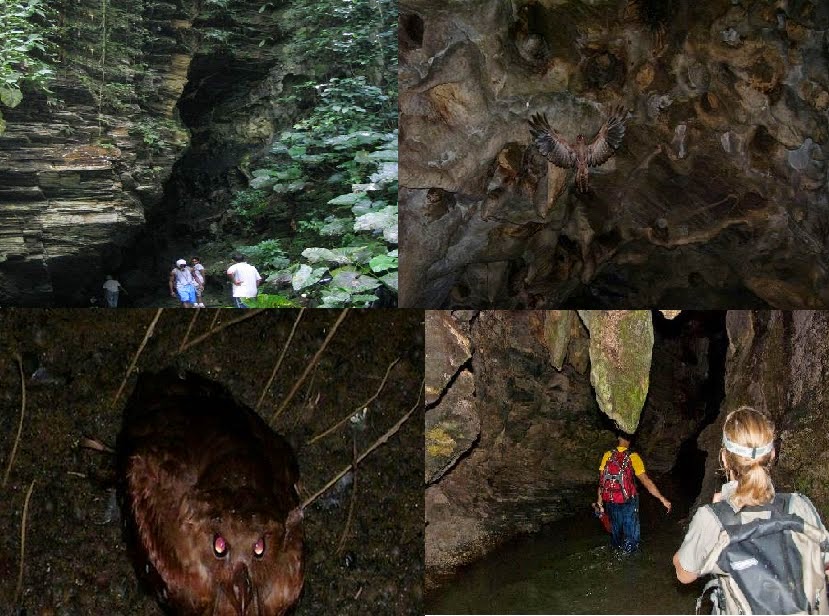
Located in the eastern area of the Northern Range, the Cumaca Cave hike is filled with exciting activities which are quite recreational and educational as well. The hike is moderately challenging with a rating of “5” due to the constant gentle uphill and the distance to complete which should take the average hiker about 2.5 hours one way. The cave itself is made by a river that flows throughout its length from which hypogean fishes also known as the semi-blind catfish are residents. The Cumaca Cave is also home to the Guacharos-Oil Birds which are the only nocturnal fruit eating birds in the world. On entrance to the cave you will be greeted by the unique cries of the Oil Birds which will intensify as you get engulfed by the cave and inevitably by the Oil Birds themselves. The cave has many chambers that can be explored all of which will leave you thrilled.


Monday, 13 October 2014

El Cerro Del Aripo

El Cerro Del Aripo stands as the highest elevation in the Republic of Trinidad and Tobago with an altitude of 3,084 feet (940 meters). Aripo is covered in tropical rainforest and montane forest. This bio diverse forest is home to a variety of birds and other animals which you will definitely see in transit. The hike to El Cerro Del Aripo is recommended only for fit hikers as it is quite strenuous with a rating of “7”and which may take as much as 7 hours to complete. As a hiker to El Cerro Del Aripo you will have to continuously climb rugged and steep sloping hills before you reach the pinnacle of the hike. This trail is often called the devil’s ladder because of its complexity and may seem boundless at times. However, once you reach the summit of the mountain you will be intrigued by the most spectacular views.


Paragon Bay-Paramin


Paragon Bay is rated a “7” as it is a challenging hike with a distance of 5.5 miles and which can take up to 6 hours round trip to complete. The hike starts off on the concrete Fond Pois Doux Road in Paramin which offers panoramic views of Port of Spain, Maraval and the Caribbean Sea. The road goes downhill steeply before you plunge into the pristine forest until you reach the base of the hill, Paragon Bay; a relatively sheltered, quaint, untouched bay perfect for a soak in the waters. After a quick dip, you prepare yourself to return uphill, a series of steep hills that steals the breath from most hikers until you reach back to the top. Paragon Bay is definitely a challenge for any hiker.

Friday, 10 October 2014

El Tucuche


Hiking to El Tucuche is indeed a heartwarming experience where the views are quite panoramic. El Tucuche being the second highest mountain in the twin islands of Trinidad and Tobago is rated a “7” as it is quite challenging. The hike has a distance of 6 miles one way and takes about 3.5 hours one way to get to the destination. The trail is quite precipitous for the most parts and during the strenuous climb to the top through the lush green and pristine rain-forest, you may see a variety of monkeys, lizards, frogs and other small mammals. Once you have mastered the undulating terrain and have reached the top of the mountain you will be rewarded with stunning views of Las Cuevas Bay, the Central Plain and the Southern Range. 


Tamana Caves


The Tamana Caves hike is a hike that you will never forget. The hike starts off in the late afternoon in the Tamana Village which is located south of Sangre Grande, Trinidad. The hike is rated a “3” or moderate in complexity and is estimated to take 1.45 hours one way and a total distance of 4 miles. A steady climb uphill is necessary to arrive at the apex of Mount Tamana. The pictographic views of the Northern Range and the Central Plain will be seen as you stand at an altitude of 750 feet at Mount Tamana. At sunset you descend downhill to the caves for an amazing experience. As darkness creeps up, the main reason for the expedition comes alive, with the evacuation of hundreds of thousands of bats from the caves. The caves interior is composed of calcium carbonate which makes perfect conditions for the bats. An estimated population of 1.5 million bats of 12 different species inhabits the Tamana Caves. This makes Trinidad the largest colony in the Caribbean and the second largest in the world next to Mexico.

Angel Falls


Angel Falls is perfectly situated on the north coast of Trinidad. The hike is rated a “3” or moderate in complexity with a distance of 4.25 miles (one way) and taking roughly about 4 hours in total to complete. The starting point of this hike is Zorro Village, a village just before Las Cuevas. The hike starts off with flat terrain and eventually through a shallow river. Hiking up a not-so-steep hill is required to get to the top but the beautiful lush and green forest will keep you motivated.  Hikers will then descend as the terrain changes to an easy downhill trek until they arrive at the Angel Falls. The celestial and mystical appearance creates an angelic effect which is perfect for relaxation.

Thursday, 9 October 2014

Matura Basin: Mermaid Pools

Situated in the North-Eastern part of Trinidad, The Mermaid Pools also known as the Matura Basin is the perfect hike for the entire family. The hike is rated a "1" meaning it's an easy one with a length of about 2 miles which can be completed in 30 to 45 minutes. As a hiker to Mermaid Pools you will be greeted by statuesque pine trees on the trail to the destination. Hikers will start off with a gradual descent to the Matura River and then a hike along the river to the pools. The Mermaid Pools are made up of three pools of turquoise color that is beautiful beyond compare. Not only are the pools beautiful but they are perfect for having a good swim or simply relaxing.

Trinidad & Tobago: A Hikers Paradise!!

Trinidad & Tobago is blessed with picturesque scenery that most would consider a hikers paradise. The country's myriad flora and fauna coupled with its lush forests, pristine waterfalls, refreshing rivers and majestic mountains all make Trinidad & Tobago a destination of choice for tourists and locals alike to discover the hidden treasures scattered throughout the islands. It  is indeed a hikers paradise having ample places to hike to, all of which will leave you breathless.